Jonas BullNavigating the frontier between AI and human
Field CTO, nClouds · AWS Premier Partner
How to talk to machines.
I help people understand the machines, so the machines can understand them. Mostly for small companies and startups, where a wrong first move costs more than it does anywhere else.
What I do
Field CTO at nClouds, an AWS Premier Partner.
It is no longer enough to hire good coders and design deterministic systems. Modern AI systems are as unpredictable as the people who made them, and alien in their motivations. Working with them well is less an engineering problem than a translation problem, which is the part most teams underestimate.
My job is the front end of that: pulling real requirements out of conversations where the customer cannot yet name what they need, and sizing the work so it survives contact with a delivery team. Architecture, AI and machine learning strategy, migrations, and the money math underneath all of it. Across a few hundred engagements at companies large and small, I have a reasonable read on what works, what does not, and what is about to.
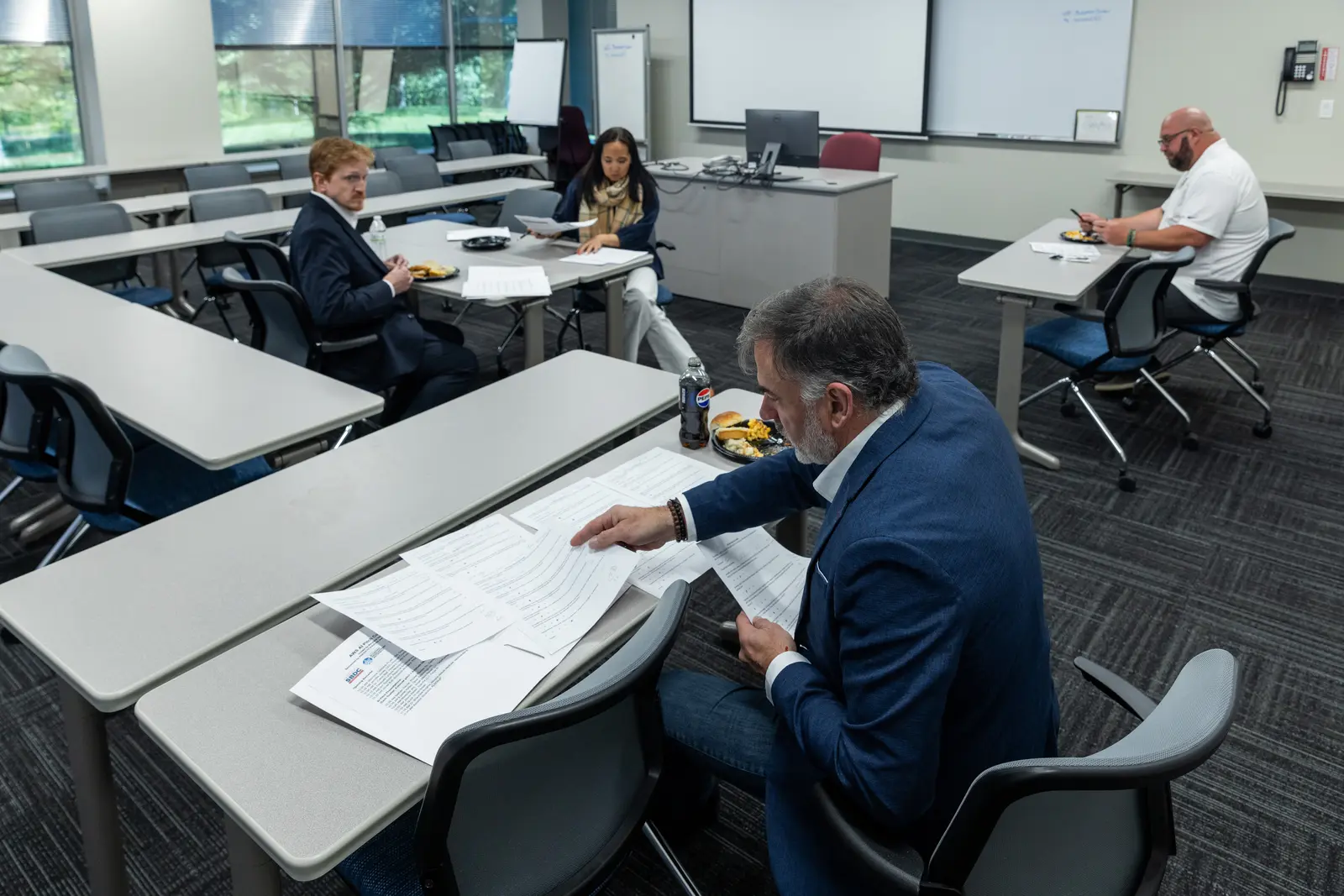
A good share of it comes through Small Business Development Centers and startup incubators: pitch competitions, workshops, and working sessions with founders sorting out which parts of this are real. I teach, I judge, and I argue with people about their business models, which is most of the fun.
Judging the AWS AI Pitch Competition
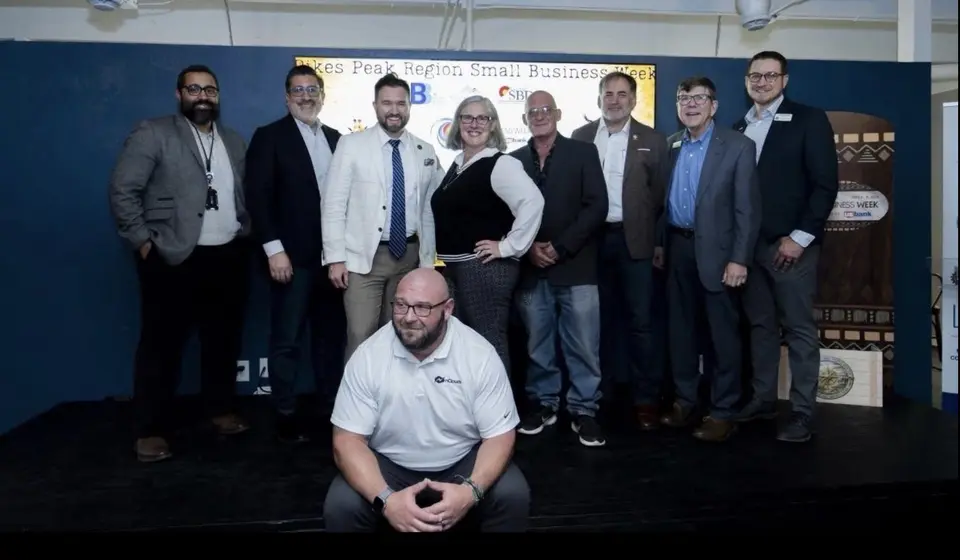
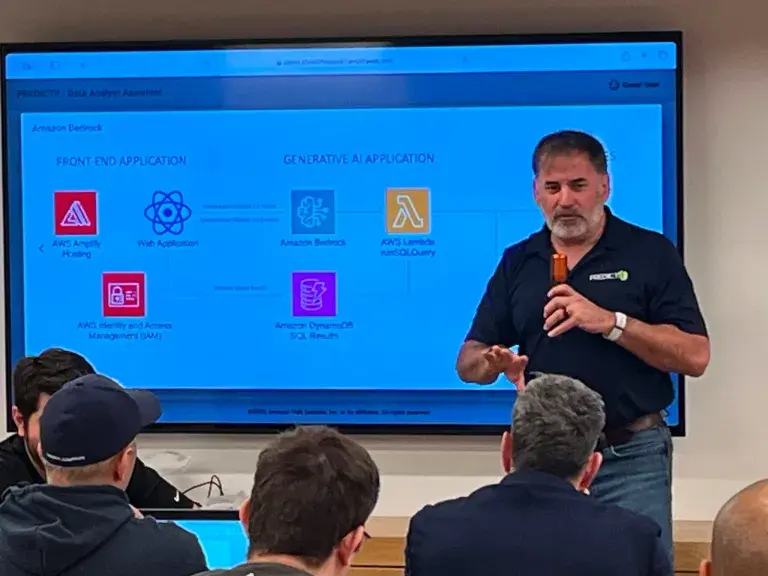
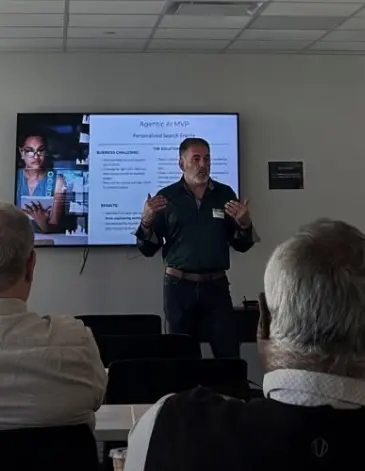
On stagePikes Peak Small Business WeekDemoing a Bedrock buildSBDC session, agentic AI
Current thinking
Some things I currently believe.
Working conclusions. I have changed my mind on earlier versions of most of these and expect to again.
Scoping
Writing the document stopped being the job.
AI dropped the cost of producing an artifact close to zero. A format-correct proposal, a clean architecture write-up, an estimate that holds up under review: that is minutes of work now for anyone with decent templates and a model. I say this as someone whose job used to be substantially those three things.
What did not get cheaper is knowing what belongs in them. Customers often cannot tell you what they need, and the first thing they ask for is usually a symptom. Coming out of that conversation with a correct read on the shape and the size of the work is still slow and still mostly unautomated, and it is where my time actually goes.
Method
Mandate the process, not the product.
Organizations trying to standardize usually reach for a product: one template, one platform, one configurator everyone has to use. It feels like progress, and then it breaks on the first customer outside its walls. Every exception it generates becomes ammunition for the people who were already arguing their customers are too unique to templatize.
A process survives that. Qualify, read the shape, pick components, apply standard language, size it, gate the review. None of that cares which tool you used. Products are what a working process produces once a shape recurs often enough to lock the defaults, and buying the tool first tends to mean serving the tool.
I hold my own tooling to that standard. Some of it I have thrown away.
Economics
The part that does not automate is being the one who was wrong.
A model will happily generate the recommendation. It will not be in the room six months later when the number missed. Liability, reputation, and the willingness to own a call are still carried by a person, and I suspect that constraint governs how fast this moves inside a business more than raw capability does.
I am not sure how durable it is. It may be less a moat than a delay, and I would not build a ten-year plan on it. But it holds today, and it explains why the exposed roles are the ones built on fluent recall rather than on signing.
Try it
Four questions, in order, pass or fail.
Most of what I do for a living is deciding which AI projects are worth building, and roughly four in ten survive the check. The other six usually die on question two, where somebody works out that verifying the output costs as much as producing it. I put the whole thing on a page so you can run your own idea through it.
It takes about five minutes, nothing you type leaves your browser unless you ask me to look at it, and there is no model anywhere in it. It is arithmetic you can check, which seemed like the honest way to build a tool whose job is killing AI projects.
Document retrieval for MDL-875Led the team that built the retrieval system for the largest class action in United States history. Several million medical records and other documents, and a lasting respect for indexing.
A self-healing, autoscaling data platform for a government agencyThe first of its kind to pass third-party security audit on the initial attempt, which is not a thing that normally happens.
Public Claude skills, on GitHubThe skills I use for real work that do not depend on my employer, my clients, or my own setup: Word redlining, an infographic builder with a render gate, cross-source synthesis, AWS MAP eligibility checks. MIT, published from the working copies I actually run.
I trained as an anthropologist before I did any of this, which is probably why I treat a technology problem as a people problem in a costume. It has been more useful than any certification I hold. Storyteller, educator, adventurer, depending on the day: from the classroom to the dojo to the boardroom, it has been an unreasonably varied run.
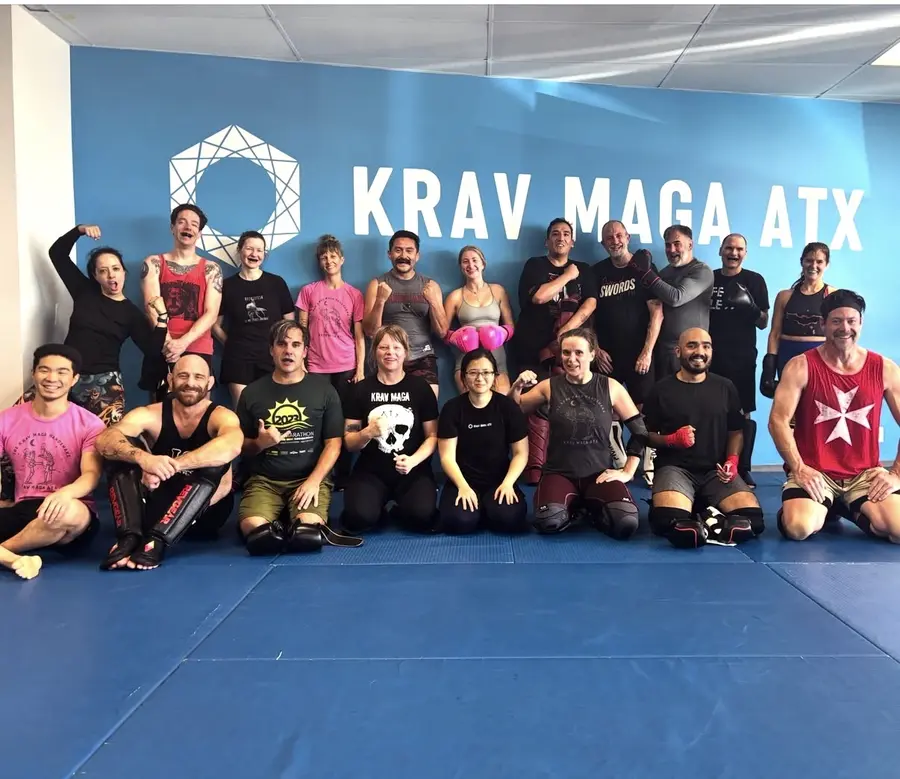
I live in Austin with my wife Sophie and two cats. Three adult children and a granddaughter, all of them better company than I deserve. I run long distances, train Krav Maga and jiu jitsu, judge food competitions, play guitar badly, and read well outside my lane: physics, ancient literature, biology, constitutional design, whatever has my attention that week. Some of it turns into a long thread. Most of it does not, and that is fine.
I also teach, speak, and mentor: former adjunct faculty at the Jindal School of Management at UT Dallas (looking for a new adjunct position!), student mentor there, former host of the Education is Painful podcast, former cohost of Noonish Live, and a regular speaker on technology and personal transformation. Principal Advisor at Toro Strategic.
The dojo part
Krav Maga brown belt (DMA, FIMA)
Carlos Machado Jiu Jitsu, white belt
Self-defense instructor (NPTA)
Certified running instructor (NPTA)
Ultramarathons, ongoing
Certified food judge (WFC, EAT)
REBT mindset certified coach
CBT certified life coach (TA)
Emotional intelligence coach (TA)
Certified archery instructor (NASP)
Angler education certified (TPWD)
Amateur radio, general class, KE5HKV
B.S. Anthropology, Southern Miss
MBA
On identity
You can let the world label you and shackle you with definitions. You can let history write your narrative, tell you who you are and how badly you are doing. You can let your past hold the reins of your future.
Or you can decide it is your job to invent something better.
I am not what happened to me. I am what I choose to become, which is a thing you have to choose more than once.
Good reasons to write: scoping a piece of AI or cloud work, speaking at an event, teaching a session, or arguing with something above. Book time directly if that is easier.